Advertising revenue can fall fast, even by double digits in a single month. Äripäev experienced this during the previous economic crisis, prompting the question: how could subscription income grow enough to cover the cost of running the newsroom and producing its journalism?
Working at Äripäev, I keep glancing at the whiteboard with its green and red lines. They began to climb noticeably last spring, lifting the newsroom’s ambitions. Those famous lines track the sharp rise in Äripäev’s subscriber numbers. The inspiration behind them was Eero Sikka, whose demanding eye helped us set a clear goal and establish the discipline to dream bigger.
I sat down with Äripäev’s deputy editor-in-chief, Aivar Hundimägi, to talk about the goal of reaching 15,000 subscribers in two years and the success that had brought the total to 12,931 by the beginning of 2020.
Why did you choose someone from outside Äripäev to lead the project?
Before Eero came in, we were trying to grow subscriptions ourselves, but progress was hard to come by. We needed a fresh and demanding eye. It’s like sport: you can set goals and train, but without a coach to challenge and encourage you, it’s easier to give in. Our leadership group had been together a long time. Before we worked with Eero, it was easy to look the other way when we failed to do what we had agreed. Eero helped us set an action plan and measures, encouraged us to choose hard-to-reach goals and established the discipline to pursue them.
What does discipline mean to Eero, and how did it change the way you worked?
His central principle is to decide what you absolutely must do this week to move closer to the long-term goal. The biggest obstacle, he says, is the “whirlwind”: all the urgent errands, meetings and emails we deal with every day. Eero pushed us to ask what was most important to do today in light of the bigger goal.
Before that, we made promises rather casually and couldn’t always keep them. When that happened, we simply gave ourselves more time. Eero emphasised that if you miss a commitment, you set a new goal but also complete the old one. Our guiding star used to disappear in the daily work. With his approach, moving towards that North Star has become part of the job.
One part of Eero’s method is to break a large goal into smaller pieces. What weekly goals and activities did you choose, and how did staff respond?
Our biggest worry at the outset was how journalists would react to a new way of working. They embraced it surprisingly quickly, probably because nobody imposed a particular set of actions on them. The commitments and goals came from the people themselves. If something didn’t work, they changed it. Broadly speaking, we asked each team leader what they thought would bring more subscribers. The editors then worked with their teams to devise actions and goals.
For example, we agreed to publish 20 stories each week that would each be read by more than a thousand subscribers. When we started, the figure was two. Today it’s nearly 20, and on good weeks it reaches 25 or more. The goal has always been clear and the actions have come from the teams. We agree on a plan together and meet weekly to review progress, analyse results and exchange ideas.
The one difficulty we had anticipated was assessing people’s work. Every day we began looking at how much each story mattered to subscribers. Previously we hadn’t distinguished subscribers from other readers, and overall readership figures could be misleading. Journalists questioned whether it was right to judge their work by the number of people reading an individual story. We explained why it mattered. If nobody reads a journalist’s piece, something has gone wrong somewhere. At the same time, we’ve held on to our values. We don’t write a story simply to collect clicks, we don’t tolerate misleading headlines and we stand by what we have always stood for. Some people were sceptical at first, but the results came and people did not work against the system.
Naturally the change did not suit everyone. Eero had warned us from the start to expect some people to leave. In the autumn I prepared a seminar presentation about our experience. Of the 16 team leaders involved, four had left Äripäev over the course of a year. I don’t know whether the subscription project was the main reason, but it certainly played some part. People come and go; there is no need to fear change in the team.
How quickly did you see results?
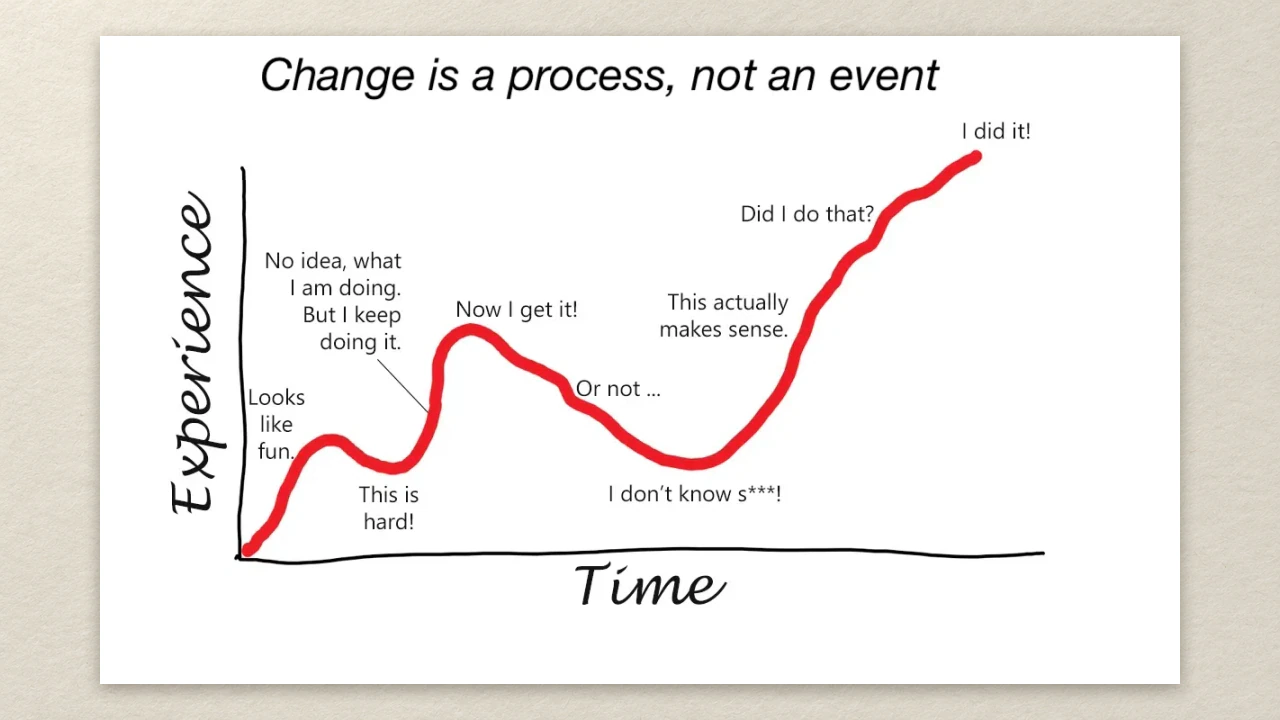
Eero warned us that change takes time and success doesn’t come overnight. For the first six months we saw little progress. Then, in the spring, a number of small changes began to pay off. The jump was noticeable. It reflected both six months’ experience and new technical developments.
Eero emphasised that every one of us would have to change something to see results. He made us describe our working processes and encouraged us to seek new solutions. When you do something differently, you can never be sure that the change will take you closer to the goal. If it fails, find another way, and sometimes a third. That takes the courage to try, experiment and make mistakes. The method is certainly no shortcut; you may even experience a setback in the short term. Being open matters.
What has been your biggest lesson about achieving goals so far?
In the spring we fell a long way short of our target. We were a thousand subscribers behind schedule. We called a crisis meeting where the team leaders made three commitments to carry out over three months to close the gap. For a time we shifted our focus from two years to three months. Concentrating on short-term action helped us make up the shortfall. Sometimes that is what a big goal requires.
Adapted from the original interview in Äripäev.